Agentic AI workflows for
enterprise,
built end-to-end.
I build agentic AI workflows for enterprise teams. Process mapping, requirements, tooling, regression-tested implementation, and adoption support. My focus is the operational layer between the user and the data, and the long tail of admin work where practical AI actually pays off.
12 years at a $7B global asset manager, with experience spanning trading, performance analysis, marketing, and compliance. Most recently I led the firm-wide AI integration, reporting to the CIO, CTO, and COO and cutting significant daily admin work.
Projects
8 shownWorkforce Coverage Model
LiveInteractive shift planning for a national support desk answering four time zones
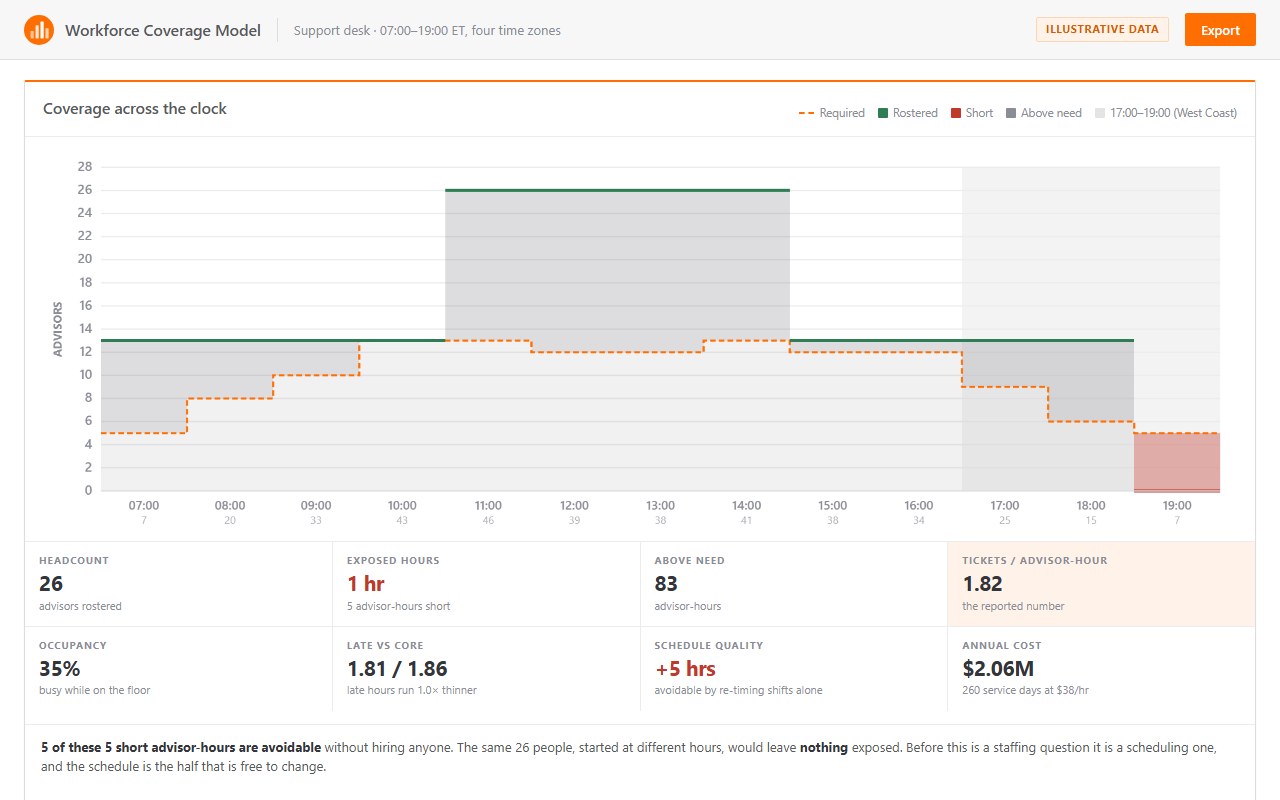
A planning tool for a national support desk answering four time zones from one location. Each zone contributes the same daily rhythm in its own local time, so the textbook lunch dip fills in and what survives is a five-hour plateau that eight-hour shifts cannot cleanly express. Requirements come from the standard Erlang C method; a roster search runs alongside it to separate the coverage gaps that need hiring from the ones that only need different start times, and prices both against a fully burdened hourly rate. An AI-agent dial shows why routine deflection relieves the plateau without shrinking the team.
LP Diligence Agent
LiveAgentic AI that reads private-equity quarterly reports and runs a nine-item LP diligence checklist
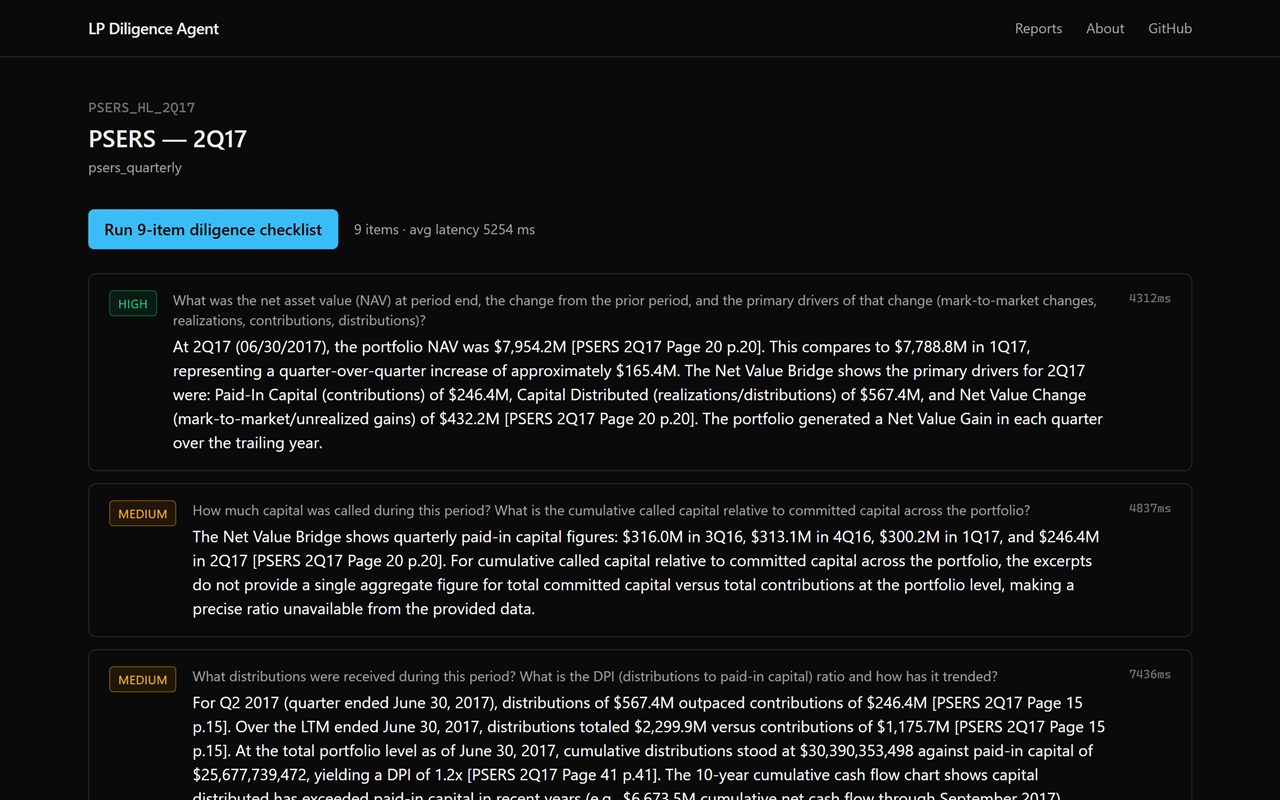
A multi-step agent that runs a nine-item diligence checklist (NAV drivers, fees, IRR/TVPI/DPI, valuation methodology) against private-equity quarterly reports and returns citation-backed answers with explicit confidence tags. When a report doesn't disclose a figure, the agent returns 'data not available' rather than fabricating.
LSE Buyback Scraper
LiveDaily RNS share-transaction monitoring with a self-improving extraction pipeline
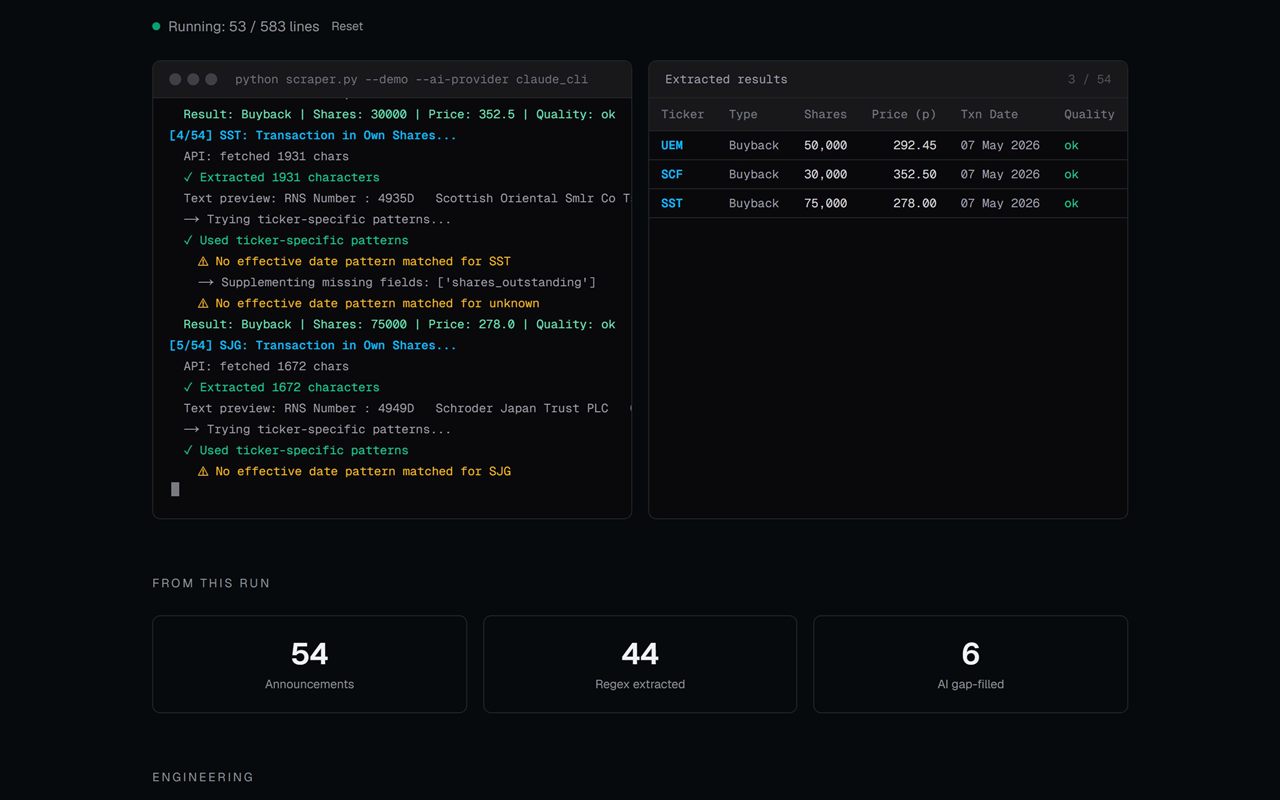
Runs daily against the London Stock Exchange RNS feed, parsing every UK Investment Trust share-transaction announcement of the day. Claude CLI is the primary extractor with a deterministic regex fast path, and patterns the two agree on get promoted into the regex library, so the system gets faster and cheaper over time without code changes.
Placet
Prototype liveWorkflow-aware document review for regulated teams
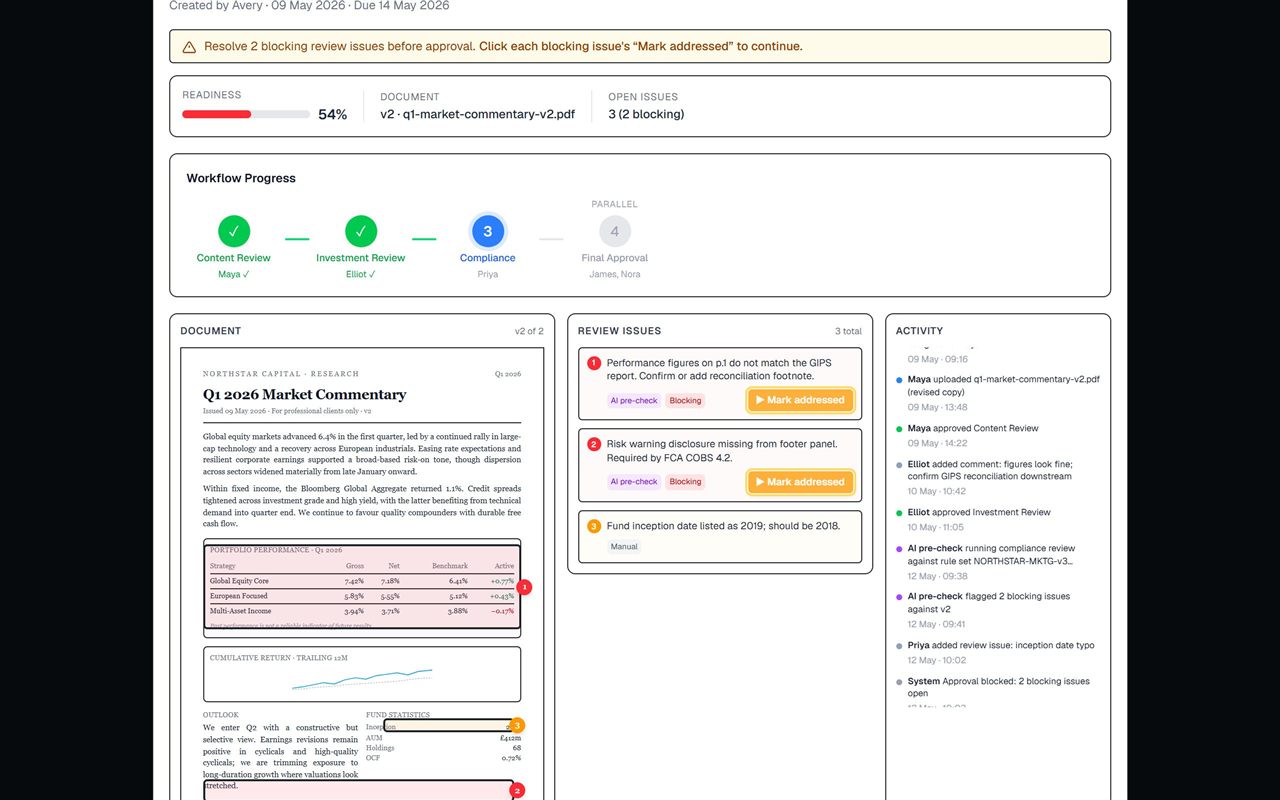
Placet (Latin: "it pleases") is the formal assent by which a governing body approves a matter put before it. A document review and approval platform for small regulated teams, built around the workflow itself, not the document: defined review stages, role-based approvals, parallel sign-offs, and a complete audit trail. AI compliance pre-checks plug into stage state, so model-assisted review is a controllable step rather than an opaque pre-process.
Filings Analyst MCP
LiveAn MCP server for querying SEC EDGAR filings, built for AI agents and humans
A Model Context Protocol server backed by a RAG pipeline over SEC EDGAR 10-Ks: section-aware chunking, local embeddings, sqlite-vec retrieval, and grounded answers with inline citations back to the filing. Pluggable across embedding and LLM providers, with measured eval metrics published verbatim in the README.
AI Capex Flow Map
LiveHyperscaler → Supplier Attribution
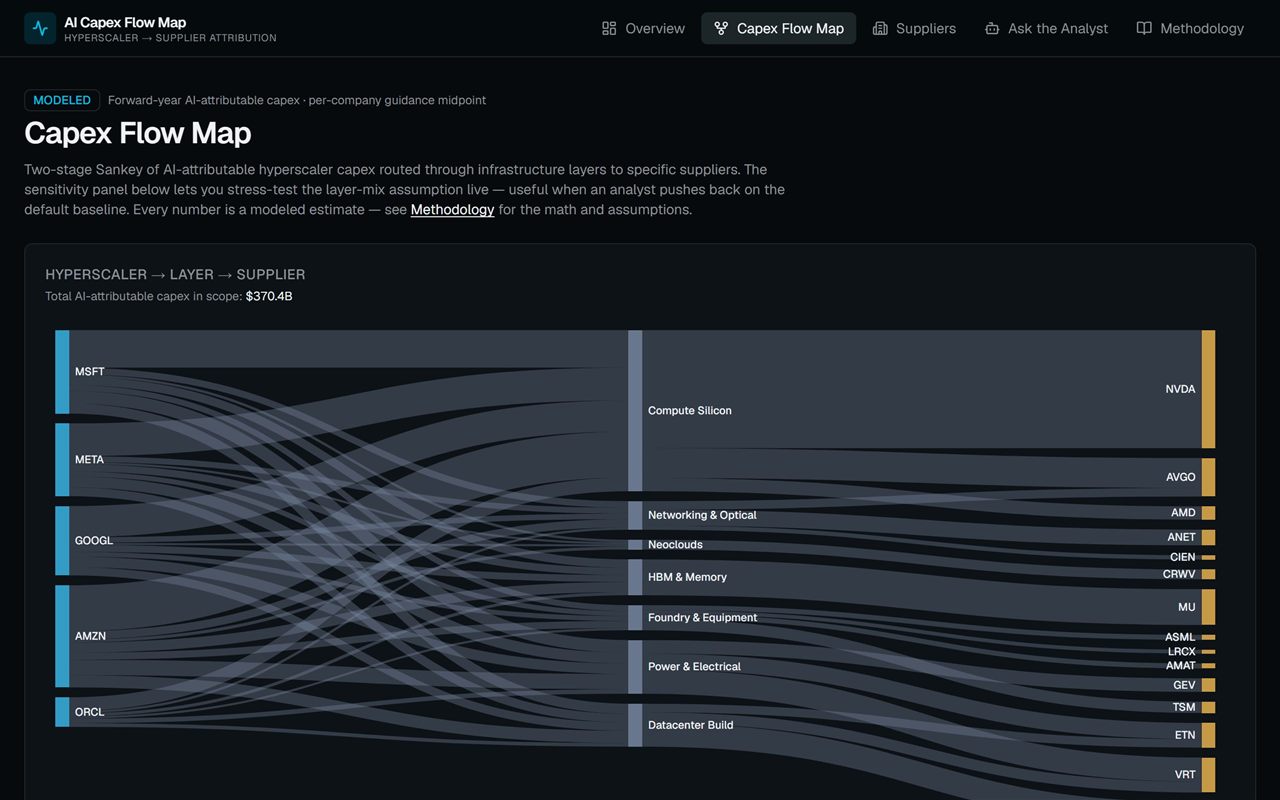
An AI-enabled research workflow for asset-management analysts. Pulls hyperscaler capex directly from SEC EDGAR filings, runs Claude structured extraction over earnings transcripts, and routes the dollars to specific supplier exposure through a transparent attribution model. An “Ask the Analyst” chatbot is grounded in the curated dataset.
Active ETF Finder
LiveFind Active ETFs that match a stock or mutual fund
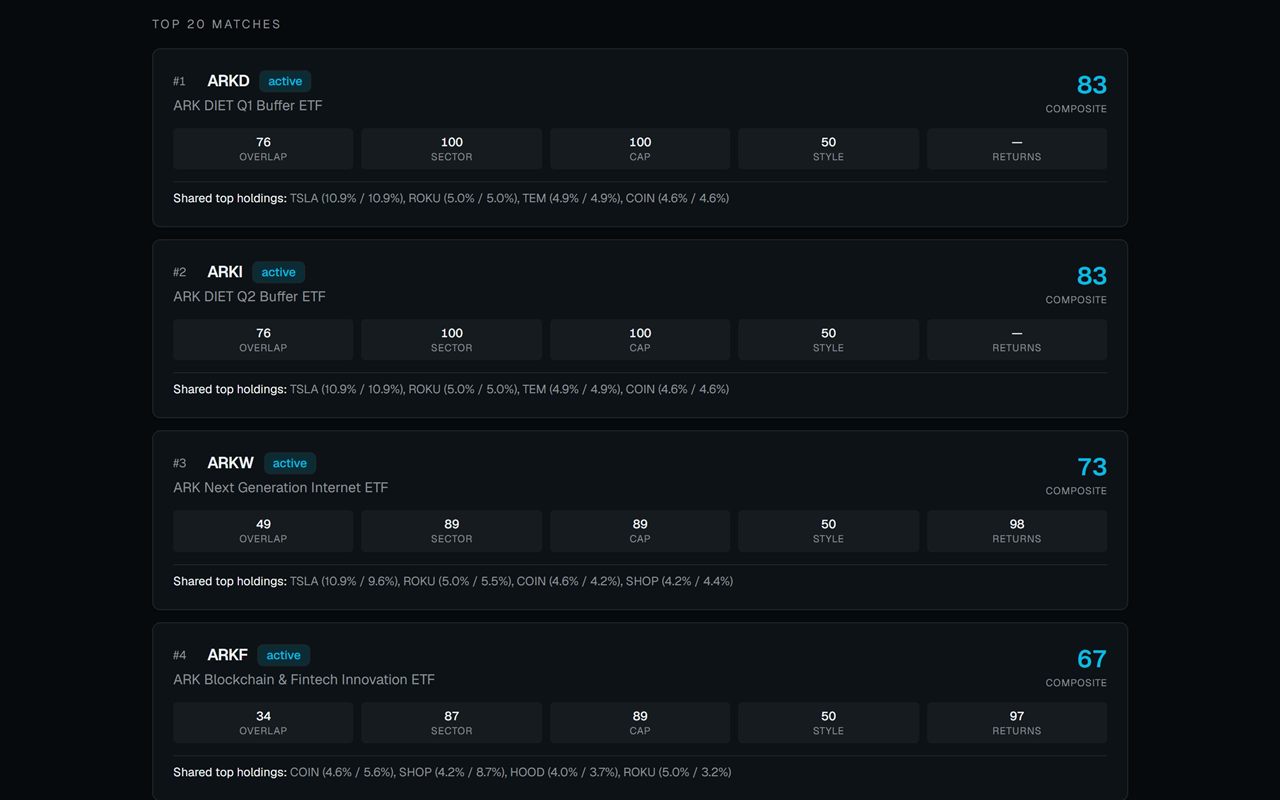
Enter any US-listed stock, ETF, or popular mutual fund and rank the Active ETFs most similar to it by underlying exposure: holdings overlap, sector and market-cap tilts, style factors, and 3-year return correlation. Profiles are built offline from SEC N-PORT-P filings; the live tool runs the similarity math in the browser.
Shortlist
LiveAn AI workflow built for one non-technical user to run herself
Most internal AI tooling dies between the demo and the desk: it needs a key someone has to provision, a server someone has to own, or a login the user never adopts. Shortlist removes all three. Every model call runs through the user's own Claude subscription on her own machine, so there is no API key, no per-token billing, and no server. The output writes straight into a formatted sheet in her Google Drive, and she keeps working in the tool she already used.